Pellet grill setup guide
Pit Boss pellet grill and smoker: how to run it right
Published July 19, 2026
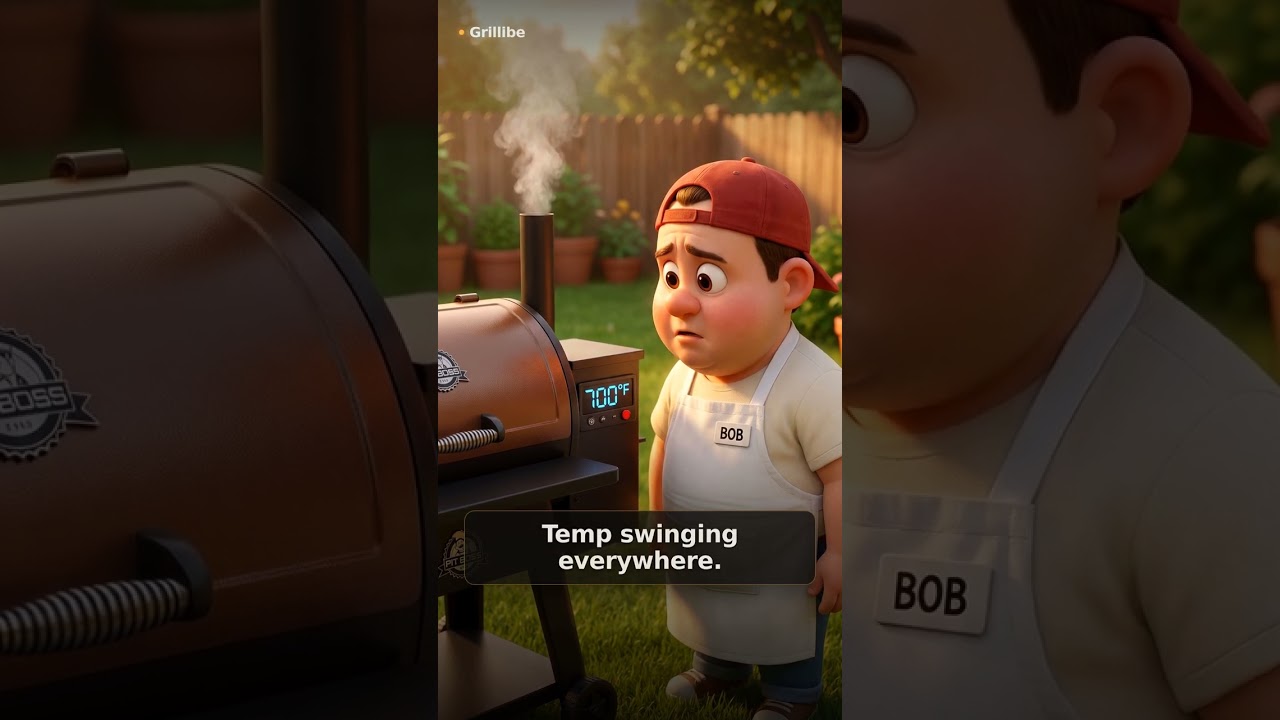
A lot of backyard cooks unbox a Pit Boss, skip straight to setting a temperature, and then wonder why the smoke flavor is weak and the temps bounce all over the place. Flip has seen Bob do it this way twice. The fix is a specific startup order, one dial called the P setting, and knowing which temperature range actually makes smoke.
Affiliate disclosure: Grillibe may earn a commission from links on this page. We only recommend BBQ gear that fits the cook, problem, or beginner setup.
Quick answer
Start every cook on the Smoke setting with the lid open for 10 minutes at 180-210°F to clear pooled fuel from the firepot. Then close the lid and set 225-250°F for low-and-slow cooks. Keep the temp at or under 250°F if you want real smoke production. The P setting only does anything in Smoke mode, and the factory default of P4 works fine for most cooks.
The startup sequence every Pit Boss owner needs to do
Every single cook starts the same way: turn the grill to the Smoke setting with the lid open for 10 minutes. The Smoke setting runs at 180-210°F and burns off any pellets or ash that pooled in the firepot since your last cook. Skipping this step is the fastest way to get a 400°F flare-up right after startup.
After those 10 minutes, close the lid and dial in your target temperature. Give the grill another 10 to 15 minutes to stabilize before any food goes on. Putting meat on an unstable grill means the first 20 minutes of your cook are wasted while the grill catches up.
How the Pit Boss controls temperature and why it swings
The Pit Boss does not use a continuous flame. It controls heat by turning the auger on and off at timed intervals, which feeds pellets into the firepot in bursts. That cycling behavior causes a normal temperature swing of plus or minus 25°F, so if you set 225°F, expect to see readings anywhere from 200°F to 250°F during the cook.
This is not a defect. It is how the system works. If you chase every number on the display by opening the lid or adjusting settings, you will make the swings worse. Set your temperature, close the lid, and let the grill find its rhythm. For a deeper look at how pellet grill temperature control works, ThermoWorks explains the science of fire management in a way that applies directly here.
The P setting: what it does and when to touch it
The P setting controls how long the auger pauses between pellet feeding cycles while in Smoke mode only. On the default P4, the grill feeds pellets for 18 seconds and then pauses for 115 seconds. A lower number like P1 shortens that pause, adds more pellets, and raises the temperature. A higher number like P6 lengthens the pause, reduces pellets, and drops the temperature closer to 170-180°F for maximum smoke output.
The moment you dial in a specific temperature like 225°F or 250°F, the P setting does nothing at all. The grill switches to its own automated feed control and ignores the P dial entirely. Only adjust the P setting if you are running in Smoke mode and the temperature is drifting too high or too low for your ambient conditions. Most cooks never need to leave P4.
Temperature ranges for common backyard cooks
For true smoke production, keep the grill at or under 250°F. Once you go above 250°F, you exit the conditions that generate visible smoke and the flavor drops off fast. For brisket, pork butt, and ribs, 225°F is the sweet spot. It gives collagen in tough cuts time to break down without drying out the surface. Check out how to get bark on a pork butt for a practical example of running a long low-and-slow cook on a pellet grill.
For chicken thighs or smoked burgers, you can run 325-375°F once you are past the startup sequence. At those temps the Pit Boss behaves more like a convection oven than a smoker, which is exactly what you want for crispy skin or a good sear. See juicy smoked burgers for a full walkthrough of that higher-heat approach.
Pellet use and how to plan your cook
Pellet consumption depends directly on how hard the grill is working. At low-and-slow temps around 225-250°F, plan on 2 lbs of pellets per hour. Running hot and fast at 350°F or above, that number jumps to 4 lbs per hour. A 12-hour overnight brisket cook will burn through roughly 24 lbs of pellets, so check your hopper before you go to bed.
Pellet type also affects smoke flavor and burn rate. Hardwoods like hickory and oak burn cleaner and longer than fruitwoods. For most proteins, a blend works better than a single wood. Whatever you use, keep the hopper at least one-third full during the cook so the auger never runs dry and causes a temperature crash.
- Low-and-slow (225-250°F): 2 lbs of pellets per hour
- Hot-and-fast (350°F and above): 4 lbs of pellets per hour
- Overnight 12-hour cook: plan for 24 lbs minimum
- Keep the hopper at least one-third full at all times
- Hardwood blends (hickory, oak) burn more consistently than fruitwood alone
Short-form angle
Flip shows Bob the exact startup sequence on a Pit Boss, including the 10-minute lid-open Smoke setting step, and explains the P setting dial in under 60 seconds.
FAQ
Why does my Pit Boss temperature swing so much?
A swing of plus or minus 25°F is completely normal. The Pit Boss controls heat by cycling the auger on and off in timed bursts rather than running a continuous flame. Do not open the lid or adjust settings to chase the swings. Set your temperature, close the lid, and let the grill stabilize on its own.
What does the P setting do on a Pit Boss?
The P setting adjusts how long the auger pauses between pellet feeds while the grill is in Smoke mode. A higher number means a longer pause, fewer pellets, and more smoke. The default is P4, which feeds pellets for 18 seconds and pauses for 115 seconds. The P setting has zero effect once you dial in a specific temperature like 225°F or 250°F.
How long should I run a Pit Boss on Smoke before closing the lid?
Run it on the Smoke setting with the lid open for 10 minutes. This burns off pooled fuel in the firepot and prevents flare-ups. After 10 minutes, close the lid, set your target temperature, and wait another 10 to 15 minutes for the grill to fully stabilize before adding food.
How many pellets does a Pit Boss use per hour?
At low-and-slow temperatures around 225-250°F, a Pit Boss burns about 2 lbs of pellets per hour. Running hot and fast at 350°F or above, that jumps to around 4 lbs per hour. For a long overnight cook, check your hopper before bed and keep it at least one-third full so the auger does not run dry.
What temperature should I smoke meat on a Pit Boss?
For true smoke flavor, keep the grill at or under 250°F. The ideal range for most low-and-slow proteins like brisket, pork butt, and ribs is 225°F. Going above 250°F reduces smoke production significantly. For chicken or burgers where you want crispier results, you can run 325-375°F after the startup sequence.