Fire setup rescue
Two-zone fire: how to save dinner when things go wrong
Published June 10, 2026
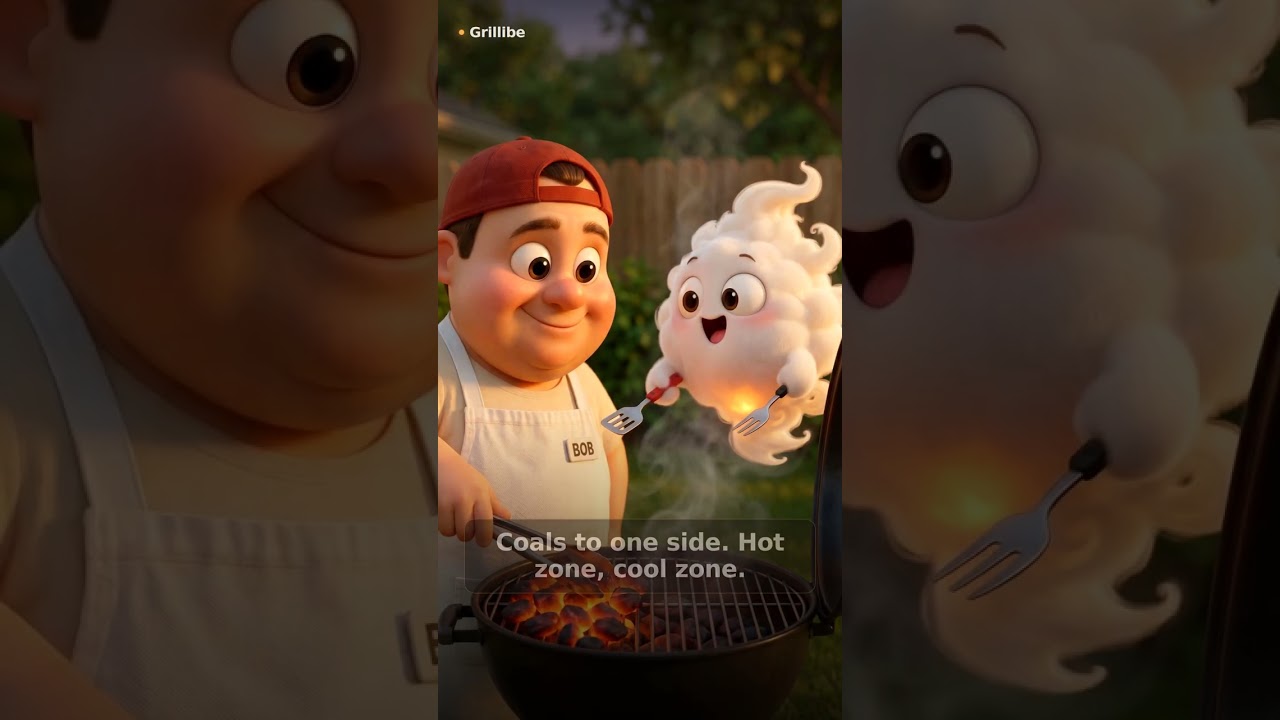
You put the chicken on, walked away for five minutes, and now one side is charred and the center is still raw. A two-zone fire is the fix for that exact moment. Set it up right and you have a hot zone for searing and a cool zone for finishing, so you can move food instead of watching it burn.
Affiliate disclosure: Grillibe may earn a commission from links on this page. We only recommend BBQ gear that fits the cook, problem, or beginner setup.
Quick answer
Push your charcoal to one side or light only half your gas burners. You want direct heat at 450 to 500 F on one side and indirect heat around 250 to 300 F on the other. Sear over the hot side, then slide food to the cool side to finish without burning. A probe thermometer tells you when to pull. This one setup handles flare-ups, rescues undercooked meat, and keeps food warm while you plate everything else.
What a two-zone fire actually is
A two-zone fire splits your grill into two distinct areas. One side has direct heat from coals or lit burners directly below the grate. The other side has no heat source under it, so food cooks from ambient heat with the lid closed, the same way an oven works.
Most backyard cooks treat their grill like a flat pan and put food over direct heat the whole time. That works for thin items like hot dogs. For anything more than 3/4 inch thick, you need a place to finish cooking without burning the outside.
How to build a two-zone fire on any grill
The setup takes about 5 minutes and works on charcoal, gas, or pellet grills. Flip always tells Bob to do this before the food goes on, not after the panic starts.
Follow these steps for your grill type:
- 1Charcoal: Light a full chimney (about 100 briquettes) and let it ash over for 15 minutes. Pour all the coals to one half of the grill. Leave the other half empty. Replace the grate.
- 2Gas: Light the left burners on high. Leave the right burners completely off. Let the grill preheat for 10 minutes with the lid closed.
- 3Pellet grill: Set the temperature to 275 F. The entire cook chamber is indirect, so use the area farthest from the fire pot as your cooler zone and the area closest as your hotter zone.
- 4Check temperatures with a grill thermometer before food goes on. You want the direct side at 450 to 500 F and the indirect side at 250 to 300 F.
Saving dinner: the most common rescues
The two-zone setup is most useful when something goes sideways mid-cook. Here are the four situations it fixes, and exactly what to do in each one.
According to USDA food safety guidelines, poultry must reach an internal temperature of 165 F and whole muscle beef at least 145 F with a 3-minute rest. A two-zone fire lets you hit those targets without burning the outside.
- Flare-up burning the outside: Move food immediately to the indirect side. Close the lid and let the flames die out. Return to direct heat only when the flare-up is gone.
- Outside charred but center raw: Slide food to the indirect side. Cook at 275 F with the lid down until the probe reads within 10 F of your target, then decide if a quick re-sear is worth it.
- Food cooked through but dinner is 20 minutes away: Park it on the indirect side at 225 F with the lid closed. It will hold without drying out for up to 30 minutes.
- Thick cut that needs a crust: Sear on the direct side for 90 seconds per side, then move to indirect to finish to temperature without overcooking the exterior.
Temperatures and timing that actually matter
The two-zone method only works if you know your numbers. Guessing by color or touch leads to the same problems you were trying to fix. A instant-read thermometer is the single most important tool for this technique. Check our recommended gear page for the models we trust.
Here are the pull temperatures for the most common proteins you will cook this way:
- Chicken thighs and drumsticks: pull at 165 F. See our smoked chicken thighs guide for a full breakdown.
- Burgers: pull at 160 F for ground beef per USDA guidelines.
- Pork chops and tenderloin: pull at 145 F, then rest 3 minutes.
- Steaks (medium-rare): pull at 130 F after a sear, or 120 F before a finishing sear.
- Sausages: pull at 160 F. Moving to indirect heat prevents splitting. See our grilled sausage guide for more.
Common mistakes that make the two-zone method fail
The most common mistake is leaving the lid open. The indirect side only works as an oven when the lid is closed. An open lid drops the indirect zone temperature by 100 F or more and turns it into dead air instead of a cooking environment.
The second mistake is not leaving enough space between the zones. On a charcoal grill, leave a 2 to 3 inch gap between the edge of the coal pile and the center of the grate. Food sitting right at the border gets radiant heat from the coals and can still burn. When in doubt, move it further toward the cool side and give it more time.
Short-form angle
Bob puts chicken directly over flames, it starts burning, and Flip walks him through sliding it to the cool side and rescuing dinner in real time.
FAQ
What is a two-zone fire on a grill?
A two-zone fire means one side of your grill has direct heat from coals or burners and the other side has no heat source under it. You sear over the hot side and finish cooking over the cool side with the lid closed.
Can you do a two-zone fire on a gas grill?
Yes. Light the burners on one side and leave the other side completely off. Preheat for 10 minutes with the lid closed. The lit side will run around 450 to 500 F and the unlit side will settle near 275 F.
How do I stop my food from burning on the grill?
Move it to the indirect side as soon as you see burning or a flare-up. Close the lid and let the food finish cooking from ambient heat. Only return it to direct heat for a final sear if needed.
How long can food sit on the indirect side without drying out?
Most proteins can hold on the indirect side at 225 to 250 F for up to 30 minutes without significant moisture loss. Keep the lid closed and avoid poking or moving the food while it holds.
Do I need a thermometer for two-zone grilling?
Yes. The whole point of moving food between zones is to hit a specific internal temperature without burning the outside. Without a thermometer you are still guessing, and guessing is what caused the problem in the first place.