Grillibe guide
Temp of Chicken Wings: When Wings Are Done
Published October 8, 2026
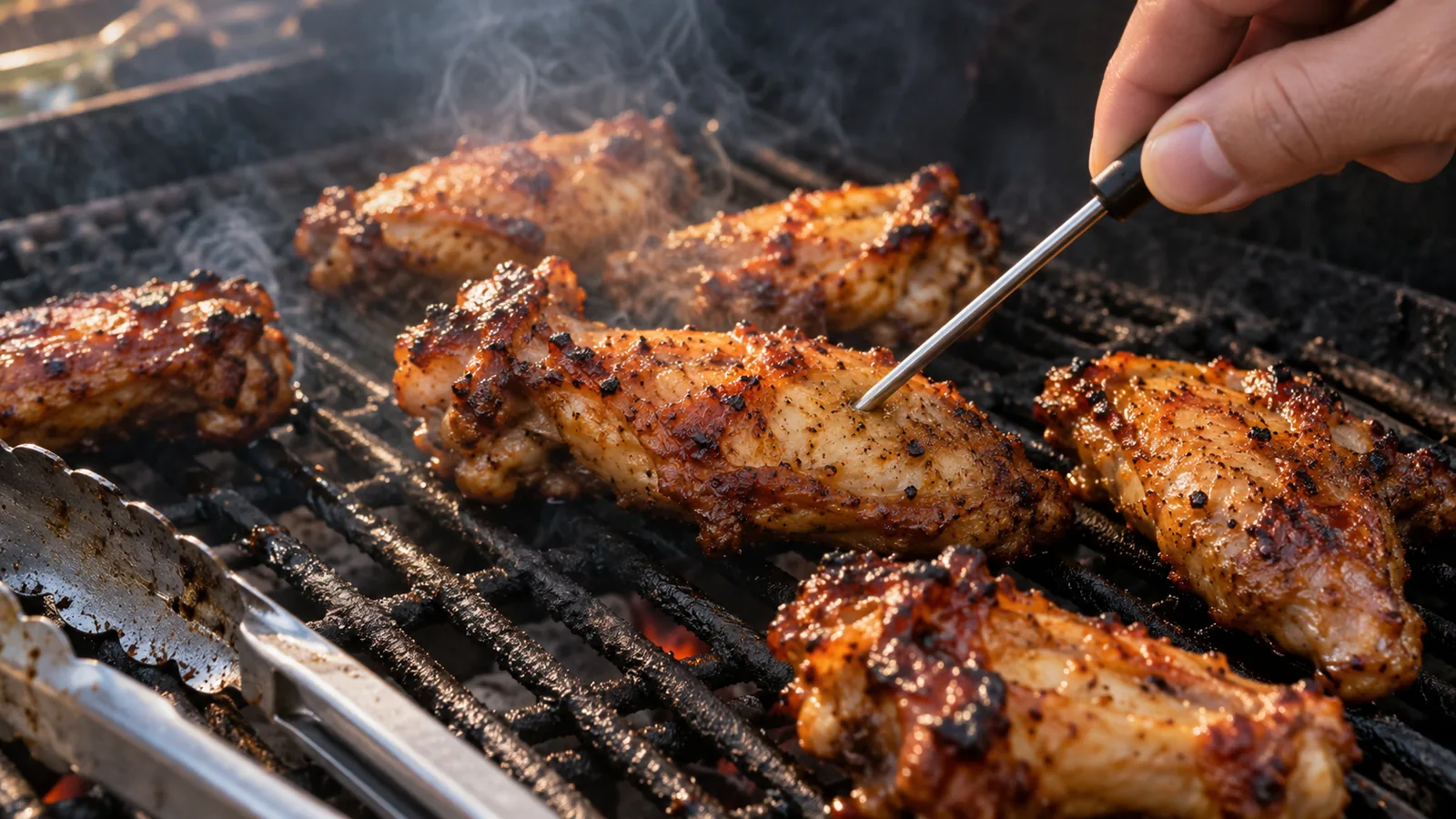
Chicken wings are safe to eat when the inside reaches 165°F. Check the thickest part of the wing with a food thermometer, and keep the probe away from the bone. Some cooks take wings higher than 165°F for a more tender bite and better skin texture. That can be fine, but 165°F is the safe chicken wing internal temp to remember.
Affiliate disclosure: Grillibe may earn a commission from links on this page. We only recommend BBQ gear that fits the cook, problem, or beginner setup.
Quick answer
Chicken wings are safe to eat when the inside reaches 165°F. Check the thickest part of the wing with a food thermometer, and keep the probe away from the bone.
Temp of chicken wings: the quick answer
The temp of chicken wings is 165°F inside. That is the minimum internal cooking temp for chicken wings.
Use a food thermometer, not color alone. Push the probe into the thickest meat on the wing. Do not let the probe touch the bone, because bone can give you a bad reading.
For flats, check the thicker middle area between the bones. For drumettes, check the thick meaty end. If you are cooking a full batch, check more than one wing before serving.
Chicken wing internal temp chart
Use this chart as a simple guide for chicken wings done temp.
The exact temperature for chicken wings can depend on how you like the bite. The safe line is 165°F, but texture may improve a little past that point.
If you are cooking brisket too, here is a helpful guide on what temperature to wrap brisket.
- Wing temp: 165°F inside; What it means: Safe to eat; What to expect: Fully cooked chicken, but texture can vary
- Wing temp: Above 165°F; What it means: Often more tender; What to expect: Dark meat and skin may eat better
- Wing temp: Much higher than needed; What it means: Overcooked; What to expect: Meat can turn dry or tough
Where to put the thermometer in wings
Where you place the thermometer matters. Wings are small, and the bone is close to the meat. A small mistake can make the reading wrong.
For flats, slide the probe into the thicker part of the flat, between the two bones. Aim for the center of the meat, not the skin and not the bone.
For drumettes, insert the probe into the thick end from the side. Try to reach the center of the meaty part without touching the bone.
If the number jumps fast or seems odd, pull the probe back and check again in a nearby spot.
How to tell wings are done without guessing
A thermometer is the clear way to know the chicken wing temp when done. Color, skin, and juices can help you judge progress, but they are not enough by themselves.
Look for these signs along with 165°F inside:
Still, the thermometer makes the call. A wing can look browned on the outside and still need more time inside.
Try not to open the cooker too often while you check. If you are using a smoker, this guide on how to stop opening the smoker can help you keep heat steady.
- The meat pulls from the bone more easily.
- The skin looks set, not rubbery.
- The wing feels firm, not soft or raw.
- The juices do not look bloody.
Why wings may taste better past the safe temp
Chicken wings have dark meat, skin, fat, and connective tissue. They are different from lean chicken breast. That is why wings can often handle more cooking after they reach 165°F.
At 165°F, wings are safe. Past that point, the meat can get more tender and the skin can improve, especially when you cook with steady heat.
This does not mean you should cook them until they are dry. It means you have a little room to cook wings for texture after they are safe. Check a few wings and stop when the bite feels right to you.
Common mistakes when checking wing temp
The biggest mistake is touching bone with the probe. Bone can throw off the reading, so check the thickest meat instead.
Another mistake is checking only one wing. Wings can cook at different speeds, especially if some are larger or sitting in hotter spots. Check a few pieces from different areas of the grill, smoker, oven, or air fryer.
Do not trust color alone. Sauce, smoke, rubs, and high heat can make wings look done before they reach the right internal temp.
Also, do not measure only the skin. The safe temperature is about the inside of the meat.
Planning wings for a cookout or holiday meal
Wings are easy to serve, but they can be hard to time when you have sides, sauces, guests, and other meats going at once. The main thing is to plan around doneness, not a fixed clock.
Wing size, cooking heat, sauce, and how crowded the cooker is can all change the cook. Start checking the thickest wings as they get close, then hold or serve once they are safe and have the texture you want.
For a cookout or holiday meal, give yourself room in the plan for checking, saucing, and resting. That keeps you from rushing the wings or serving them before they hit 165°F.
Chicken wing temp questions
If you remember one thing, remember this: chicken wings are done safely at 165°F inside. Check the thickest meat with a thermometer, away from bone.
If you want a more tender bite, you can cook wings past the safe point. That is common with wings because they have skin and dark meat.
If you are making wings as part of a bigger meal, the hard part is usually timing everything together. Grillibe can help you map out the cook so you know what to check and when.
Ready to make the whole meal easier to manage? Use Grillibe to plan your holiday cook so your wings, sides, and main dishes have a clear path from prep to serving.
FAQ
What is the temp of chicken wings?
The temp of chicken wings is 165°F inside. That is the safe internal temperature for cooked chicken wings. Use a food thermometer in the thickest part of the meat and keep it off the bone.
What is chicken wing internal temp?
Chicken wing internal temp means the temperature in the center of the meat, not the outside skin. For safety, it should reach 165°F. Check flats between the bones and drumettes in the thick meaty end.
What temp are chicken wings done?
Chicken wings are done safely at 165°F inside. Some cooks take them higher for a more tender bite and better skin texture. Do not use color or juices alone to decide.
Where do you check the temp of chicken wings?
Check the thickest part of the wing. On flats, place the probe in the thicker meat between the bones. On drumettes, check the thick end from the side and avoid touching bone.
Are chicken wings done at 165°F?
Yes, chicken wings are safe to eat at 165°F inside. You can serve them at that point if the texture is how you like it. You can also cook them a little longer for tenderness, as long as they do not dry out.