Turkey rescue guide
Smoked spatchcock turkey: fix the overcooking problem
Published June 21, 2026
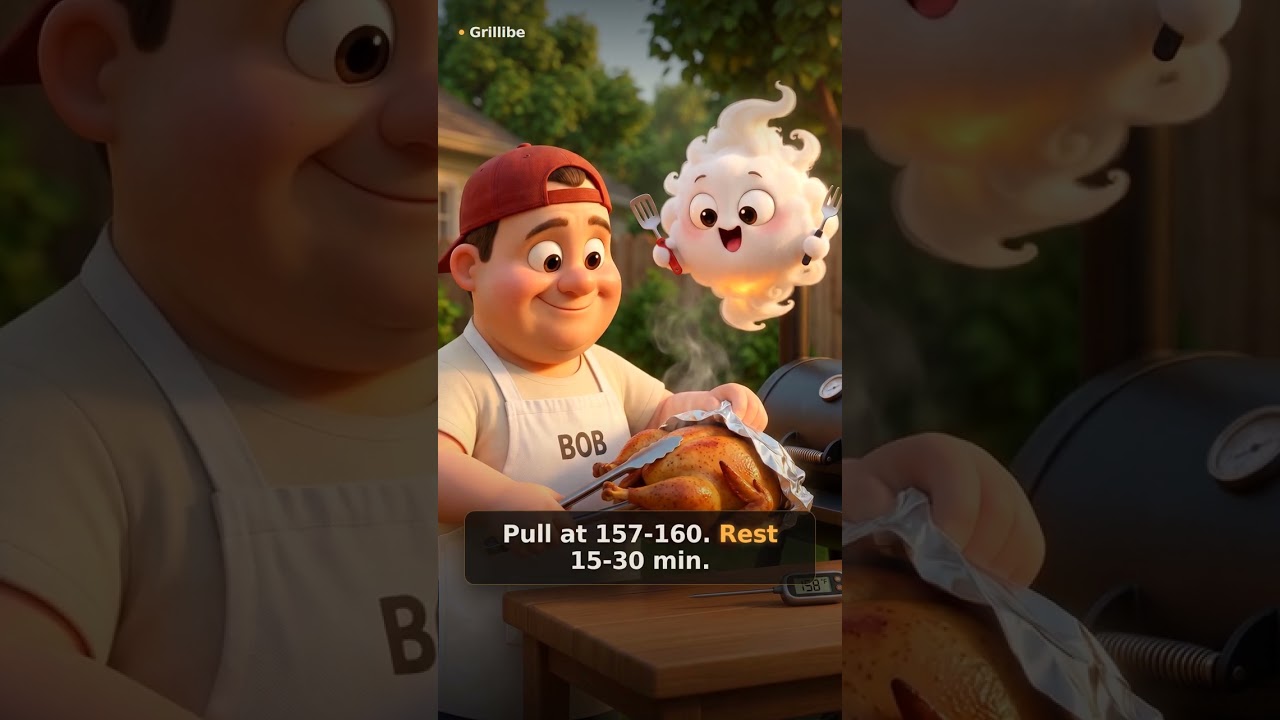
Bob had a 12-pound bird flattened and on the smoker, and he was feeling confident. Then he walked away for 30 minutes too long and the breast hit 175 F before he pulled it. Flip shook his head and pointed at the thermometer. The fix is simple: spatchcocking already cuts your cook time nearly in half, so you have to watch the temperature more closely, not less. This guide walks through exactly how to smoke a spatchcock turkey so the breast stays juicy and the skin actually browns.
Affiliate disclosure: Grillibe may earn a commission from links on this page. We only recommend BBQ gear that fits the cook, problem, or beginner setup.
Quick answer
Spatchcock your turkey, smoke it at 275 F, and pull it when the breast hits 160 F. Rest the bird for 20 to 30 minutes and carryover heat will bring it to the USDA-safe 165 F. A 10 to 14 pound bird takes roughly 2 to 4 hours depending on smoker temp. Cook to temperature, not time, and use a probe thermometer the whole way through.
Why spatchcocking changes everything about the cook
Spatchcocking means removing the backbone and pressing the bird flat. That one step increases surface area dramatically, so the breasts and thighs are exposed to the same heat at the same time. As Serious Eats explains in their smoked butterflied turkey guide, this more even exposure is the whole reason the method works.
On a whole bird, the breast sits higher and cooks faster than the thighs. By the time the thighs hit 165 F, the breast is already dry. Flattening the bird closes that gap and gives you a much wider window to pull everything at the right temperature.
How to spatchcock a turkey in 5 minutes
You need a pair of heavy kitchen shears or poultry shears. A sharp knife works too, but shears are faster and safer. The whole process takes about 5 minutes once you have done it once.
Follow these steps:
- 1Place the turkey breast-side down on a cutting board.
- 2Cut along both sides of the backbone from tail to neck and remove it. Save the backbone for stock.
- 3Flip the bird breast-side up and press down firmly on the breastbone with both hands until you hear it crack flat.
- 4Tuck the wing tips behind the breast to keep them from burning.
- 5Pat the bird completely dry with paper towels, inside and out, before seasoning.
Smoker temperature and timing: the two main methods
There is no single right answer on smoker temp. The choice is between more smoke flavor at lower heat and faster, crispier skin at higher heat. Both methods work. Pick the one that fits your schedule.
Here are the two most reliable approaches for a 10 to 14 pound bird:
- Low and slow at 225 to 275 F: Smoke for about 3 hours (give or take 30 minutes for a 10 to 12 pound bird). You get deeper smoke penetration and more time to develop bark on the skin. Pull the breast at 160 F and rest for 20 to 30 minutes.
- Hot and fast at 275 to 325 F: The bird can finish in 90 to 120 minutes. Skin browns faster and the cook is easier to manage on a busy day. Still pull the breast at 160 F and rest the same way.
- Two-stage method: Start at 225 F for about 2 hours to load up on smoke, then raise the smoker to 325 to 350 F to crisp the skin and push the breast to 160 F. Rest for at least 15 minutes before carving.
The temperature targets that actually matter
The breast and the thigh need different final temperatures, and that is the whole challenge with turkey. The USDA minimum safe internal temperature for poultry is 165 F. You can pull the breast at 160 F because carryover cooking during the rest will carry it the rest of the way. Check the thigh at the thickest point near the joint and make sure it hits at least 165 F before you carve.
Never rely on time alone. A cold bird, a windy day, or a smoker that runs cool can all add 30 to 45 minutes to your cook. Probe the breast from the side, not the top, and keep the thermometer tip away from bone. For more on safe poultry temps, the USDA FSIS poultry safety page has the full guidance.
Resting, carving, and the gear that makes it easier
After you pull the bird at 160 F, tent it loosely with foil and leave it alone for 20 to 30 minutes. That rest lets the juices redistribute and lets carryover heat finish the breast safely. Cutting into it early is how Bob ended up with a dry plate and a lecture from Flip.
For carving, separate the legs and thighs first, then slice the breast away from the bone in one piece before cutting across the grain. A reliable instant-read thermometer is the single most important tool for this cook. Check out the gear page for what to look for in a probe thermometer. If you want to compare technique on a smaller bird first, the smoked turkey breast guide is a good starting point.
Short-form angle
Flip watches Bob almost overcook a spatchcock turkey and walks through the one thermometer trick that saves it.
FAQ
What temperature should I smoke a spatchcock turkey at?
Most backyard cooks use 225 to 275 F for a longer, smokier cook or 275 to 325 F for a faster cook with crispier skin. Both work. The key is pulling the breast at 160 F and resting the bird so carryover heat finishes it to 165 F.
How long does a spatchcock turkey take to smoke?
A 10 to 14 pound bird takes roughly 2 to 4 hours depending on your smoker temperature. At 275 F, expect closer to 90 to 120 minutes. At 225 F, plan for 3 hours or more. Always cook to internal temperature, not just time.
What internal temperature should a smoked spatchcock turkey reach?
Pull the breast at 160 F and let carryover cooking bring it to the USDA-safe 165 F during the rest. Check the thigh near the joint and make sure it hits at least 165 F before carving.
Do I need to brine a spatchcock turkey before smoking?
Brining helps but is not required. A dry brine (salting the bird and leaving it uncovered in the fridge overnight) does two things: it seasons the meat deeper and dries out the skin so it browns better on the smoker. If you are short on time, even 2 to 4 hours of dry brining makes a noticeable difference.
Why does spatchcocking make turkey cook faster?
Flattening the bird exposes more surface area to direct heat at once. The breasts and thighs cook side by side instead of stacked, which closes the temperature gap between them and cuts total cook time by roughly 30 to 50 percent compared to a whole bird.