Steak technique guide
Reverse sear steak temperature: nail doneness every time
Published May 30, 2026
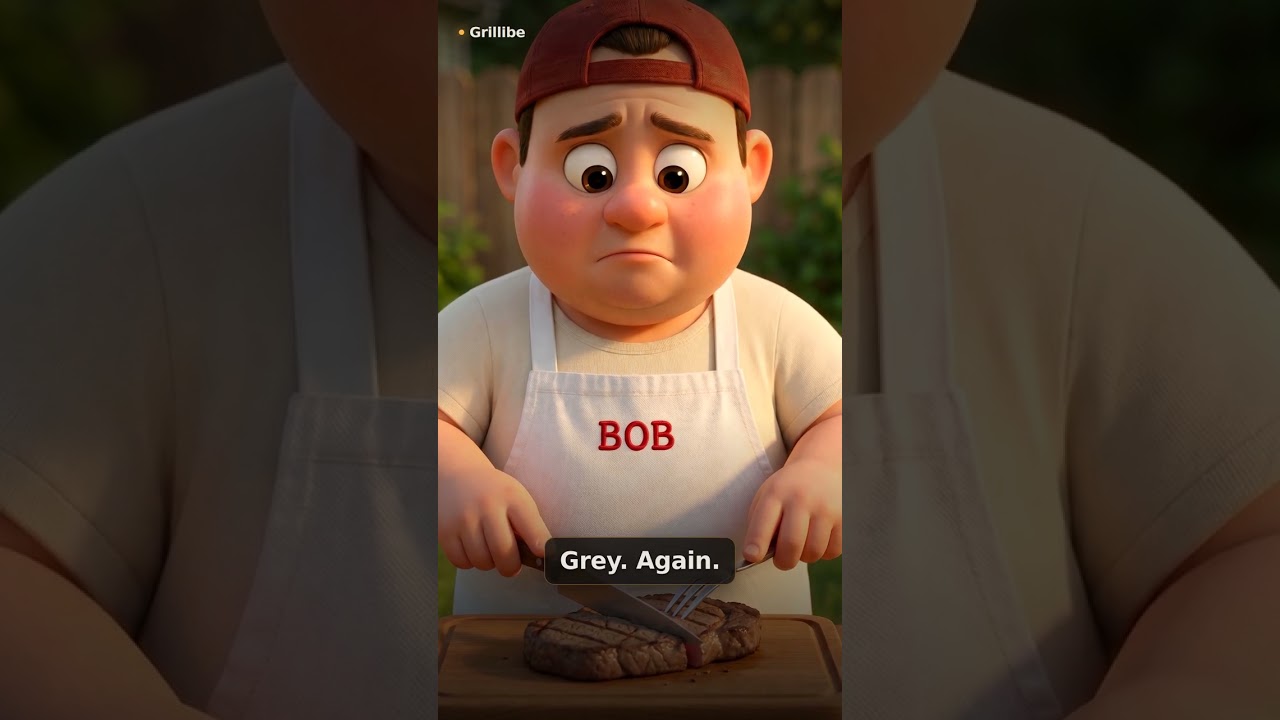
You pull a thick steak off the grill and cut into it, only to find a gray band of overcooked meat under the crust. That is the problem reverse searing solves. By cooking low and slow first, then searing at the end, you get edge-to-edge doneness and a crust that forms in under two minutes.
Affiliate disclosure: Grillibe may earn a commission from links on this page. We only recommend BBQ gear that fits the cook, problem, or beginner setup.
Quick answer
Cook your steak on a low indirect heat at 225F to 250F until the internal temp hits 10 to 15 degrees below your target doneness. For medium-rare, pull it off at 115F to 120F. Rest it for 5 minutes, then sear over screaming-hot direct heat for 60 to 90 seconds per side. A fast-read thermometer is not optional here. It is the only way to know exactly where you are.
Why reverse sear works better than sear-first
Traditional sear-first cooking pushes heat from the outside in. By the time the center reaches 130F for medium-rare, the outer layer has already climbed past 160F and turned gray. That gray band is overcooked protein, and you cannot fix it after the fact.
Reverse searing flips the order. You bring the whole steak up to near your target temp slowly, so the temperature gradient inside the meat is almost flat. When you sear at the end, the crust forms fast because the surface is already dry, and the interior barely moves. Flip calls this cooking with intention instead of hope.
The temperature targets for every doneness level
Pull-off temps during the low phase are 10 to 15 degrees lower than your final target. The sear adds that heat back in about 90 seconds per side. Use these numbers as your guide.
According to USDA food safety guidelines, whole muscle beef is safe at an internal temp of 145F with a 3-minute rest. Medium-rare at 130F to 135F is a personal choice, not a food safety recommendation, so cook to your own comfort level.
- Rare: pull at 105F to 110F, final target 120F to 125F
- Medium-rare: pull at 115F to 120F, final target 130F to 135F
- Medium: pull at 125F to 130F, final target 140F to 145F
- Medium-well: pull at 135F to 140F, final target 150F to 155F
How to use a meat thermometer during the low phase
A leave-in probe thermometer is the right tool for the low phase. Clip it into the thickest part of the steak, away from bone and fat. Set an alert for your pull temp so you do not have to hover over the grill. The low phase on a steak this thick usually takes 25 to 45 minutes at 225F to 250F, depending on thickness.
For the sear, you need a fast-read instant thermometer with a response time under 3 seconds. The steak goes from pull temp to done in under 3 minutes total. If your thermometer takes 10 seconds to stabilize, you will overshoot. Check out our thermometer guide for what to look for in both types.
Step-by-step: the full reverse sear process
This method works best on steaks that are at least 1.5 inches thick. Thinner steaks heat through too fast during the low phase and you lose the advantage. Ribeye, strip, and tomahawk cuts are ideal. Season generously the night before and leave the steak uncovered in the fridge. The dry surface forms a better crust during the sear.
Get your sear surface as hot as possible before the steak comes off the low side. A cast iron skillet over a burner, a charcoal chimney sear, or a dedicated sear zone on your grill all work. You want surface temps above 600F. That high heat is what creates the Maillard reaction crust in under 2 minutes without cooking the interior further.
- 1Season steak and refrigerate uncovered for at least 1 hour, ideally overnight
- 2Set up your grill for indirect heat at 225F to 250F
- 3Insert a leave-in probe into the thickest part of the steak
- 4Cook indirect until the internal temp hits your pull target (see doneness chart above)
- 5Remove steak and tent loosely with foil for 5 minutes while you get the sear surface screaming hot
- 6Sear 60 to 90 seconds per side over direct high heat above 600F
- 7Check internal temp with a fast-read thermometer before pulling
- 8Rest 3 to 5 minutes, then slice against the grain
What to look for in a thermometer for reverse searing
You need two different tools for this cook. A leave-in probe with a wireless receiver or app alert handles the slow phase so you can walk away. Look for one rated to at least 500F on the probe cable, since you will leave it clipped in while the grill runs. Cable quality matters more than brand name here. According to ThermoWorks, probe accuracy within plus or minus 1 to 2 degrees F is what separates a useful thermometer from a frustrating one.
For the sear phase, response time is everything. A good instant-read should register in 2 to 3 seconds. Avoid any thermometer that takes longer than 5 seconds. You also want a rotating display so you can read it at any angle without burning your hand. See our recommended gear page for the features worth paying for and the ones that are just marketing.
Short-form angle
Flip shows Bob the gray-band problem on a sear-first steak, then cuts into a reverse-seared steak side by side to show the difference in 60 seconds.
FAQ
What temperature do you pull a steak for reverse sear medium-rare?
Pull the steak off indirect heat at 115F to 120F. The sear will bring it up to 130F to 135F, which is medium-rare. If you pull at 125F or higher, the sear will push you into medium territory.
Do you need to rest the steak between the low phase and the sear?
Yes. Rest for 5 minutes after the low phase. This lets the surface moisture evaporate, which helps the crust form faster during the sear. A wet surface steams instead of sears and you lose the crust you worked for.
Can you reverse sear on a gas grill?
Yes. Turn one or two burners to low and leave the others off. Put the steak over the off burners and close the lid. Aim for a grill temp of 225F to 250F in the indirect zone. For the sear, crank all burners to max and give it 10 minutes to get hot before the steak goes back on.
How thick does a steak need to be for reverse sear to work?
At least 1.5 inches thick. Thinner steaks heat through too quickly during the low phase and you do not get the even interior that makes reverse searing worth the extra time. A 2-inch ribeye or tomahawk is the ideal candidate.
What if I do not have a leave-in probe thermometer?
You can use a fast-read instant thermometer, but you will need to check the steak every 5 to 7 minutes during the low phase. It is tedious and you risk losing heat every time you open the lid. A leave-in probe with an alert is a much better experience for this specific cook.