Crispy wings rescue
Wings with rubbery skin: how to get crispy smoked wings
Published June 6, 2026
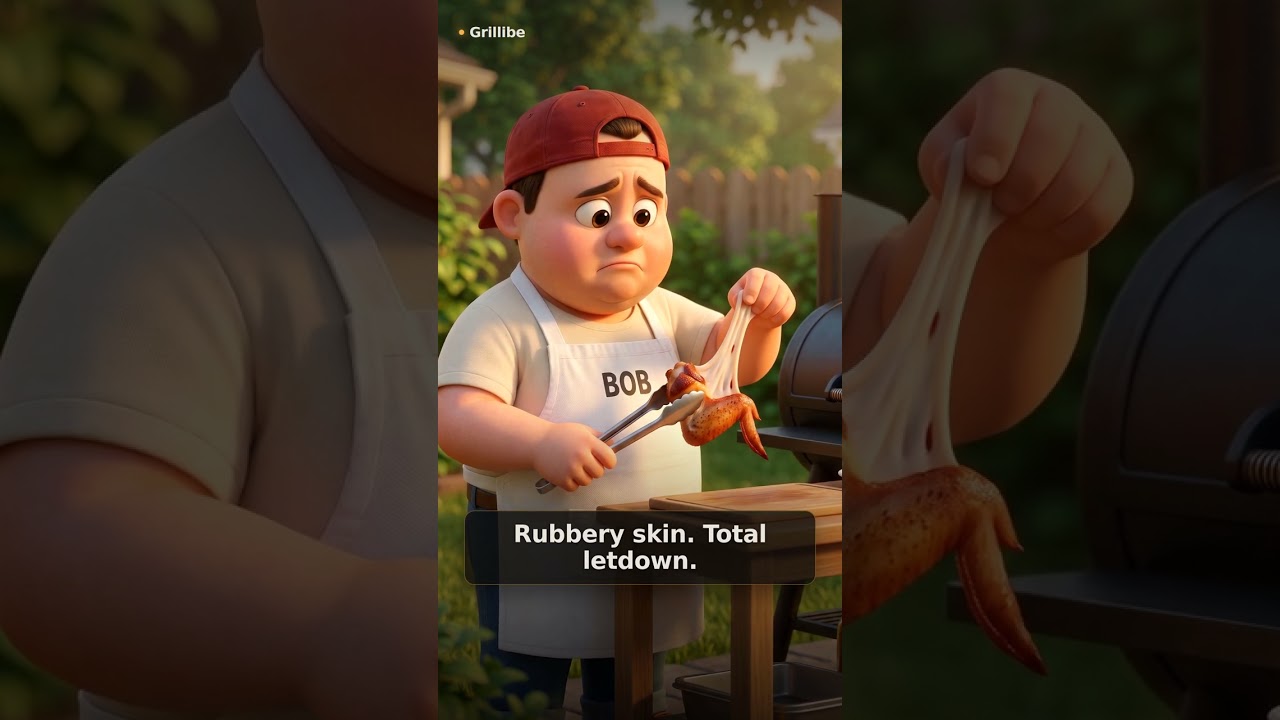
You pull your wings off the smoker and the skin is soft, pale, and rubbery instead of snappy and golden. The smoke flavor is there, but the texture is a letdown. The fix is not a mystery. A few specific steps before and during the cook change everything.
Affiliate disclosure: Grillibe may earn a commission from links on this page. We only recommend BBQ gear that fits the cook, problem, or beginner setup.
Quick answer
Dry your wings uncovered in the fridge for at least 4 hours (overnight is better), then smoke at 225 F until the meat hits 165 F internally. Crank the heat to 400 F or higher for the last 10 to 15 minutes to blister the skin. That high-heat finish is the step most people skip, and it is the one that actually makes skin crispy instead of rubbery.
Why smoked wings come out rubbery
Low-and-slow smoke is great for collagen-heavy cuts like brisket or pork shoulder. Wings are a different animal. Chicken skin is mostly water and fat, and at 225 F that fat renders slowly while the moisture just sits there, steaming the skin soft.
The result is rubbery, chewy skin that no amount of sauce can hide. Bob made this mistake his first time, pulling wings straight from the smoker and wondering why they looked like they had been boiled. Flip pointed out that the smoke was only half the job.
Dry the wings before they ever touch the grill
Moisture is the enemy of crispy skin. Pat your wings completely dry with paper towels, then set them on a wire rack over a sheet pan. Leave them uncovered in the refrigerator for at least 4 hours, and overnight if you can plan ahead. The cold, dry air pulls surface moisture off the skin.
After the fridge rest, dust the wings lightly with baking powder at a ratio of about 1 teaspoon per pound of wings. Baking powder raises the pH of the skin, which speeds up browning and helps the surface dry out even more during the cook. Do not use baking soda. It tastes bitter and will ruin the wings.
The smoke phase: temp, time, and wood choice
Set your smoker to 225 F and use a mild wood. Fruit woods like apple or cherry work well with chicken. Hickory is fine in small amounts, but heavy smoke can turn bitter on chicken skin faster than on beef or pork.
Smoke the wings until the internal temperature of the thickest part of the flat or drumette hits 165 F, which is the USDA minimum safe temperature for poultry. At 225 F this typically takes 45 to 60 minutes depending on wing size. Use a probe thermometer and check the meat, not the bone.
The high-heat finish that actually crisps the skin
This is the step that separates crispy wings from rubbery ones. Once your wings hit 165 F, crank your smoker, grill, or oven to 400 to 425 F. Cook for another 10 to 15 minutes, flipping once at the halfway point. You want the skin to blister and tighten. It will go from pale to golden quickly, so watch it.
If your smoker struggles to reach 400 F, finish the wings on a gas or charcoal grill over direct heat, or slide them under a broiler set to high for 5 to 8 minutes per side. The method matters less than the temperature. High heat is what drives the remaining moisture out of the skin and renders the fat underneath. Check out our guide on smoked chicken thighs for the same high-heat finish applied to a bigger cut.
Seasoning, sauce timing, and common mistakes
Season wings before the smoke phase, not after. A simple rub of salt, garlic powder, smoked paprika, and black pepper works well. Keep the rub dry. Wet marinades add moisture back to the skin and undo the drying work you did in the fridge. If you want sauce, apply it in the last 3 to 5 minutes of the high-heat finish so it caramelizes instead of just sitting wet on the skin.
A few mistakes that guarantee rubbery skin every time:
- Skipping the fridge dry rest and cooking wings straight from the package.
- Cooking at low heat the entire time with no high-heat finish.
- Saucing the wings early and letting the sauce steam the skin.
- Stacking wings on the grate so they touch each other and trap steam.
- Pulling wings before the skin has visibly tightened and colored, even if the internal temp is already at 165 F.
Short-form angle
Side-by-side comparison of wings pulled straight from the smoker at 225 F versus wings given a 10-minute high-heat finish, showing the skin texture difference up close.
FAQ
Why are my smoked wings always rubbery?
The most common reason is moisture. Chicken skin holds a lot of water, and low smoker temps do not get hot enough to drive that moisture out. You need a high-heat finish at 400 F or above for 10 to 15 minutes after the smoke phase to crisp the skin properly.
Does baking powder really help crispy wings?
Yes. Baking powder (not baking soda) raises the pH of the skin, which speeds up the Maillard browning reaction and helps the surface dry out during cooking. Use about 1 teaspoon per pound of wings and mix it into your dry rub before applying.
What temperature should smoked wings be when done?
The USDA sets the minimum safe internal temperature for chicken at 165 F. For wings, check the thickest part of the flat or drumette with a probe thermometer, avoiding the bone. After hitting 165 F, continue with the high-heat finish until the skin is visibly golden and tight.
Can I make crispy wings on a pellet smoker?
Yes, but most pellet smokers top out around 450 to 500 F, which is enough. Smoke at 225 F until the wings hit 165 F internally, then crank the smoker to its highest setting for the last 10 to 15 minutes. If your pellet grill runs cool at high temps, finish the wings on a gas grill or under a broiler instead.
How long should I dry wings in the fridge before smoking?
At least 4 hours uncovered on a wire rack. Overnight (8 to 12 hours) gives better results. The cold, dry air pulls surface moisture off the skin, which is the foundation of crispy texture. Skipping this step makes every other trick less effective.